Fahndung 2.0
**The first major private Twitter manhunt in Germany**
*Article originally written on 6 December 2012, with some updated explanations at the end (2026).*
#### The incident
My son, the software developer Bernd Seiffert, was hit at high speed by a Mercedes Sprinter on 28 April 2010 in Mönchengladbach while riding his bicycle. He was thrown against / onto a stone bollard.
It could have happened to anyone who was cycling there at that time.
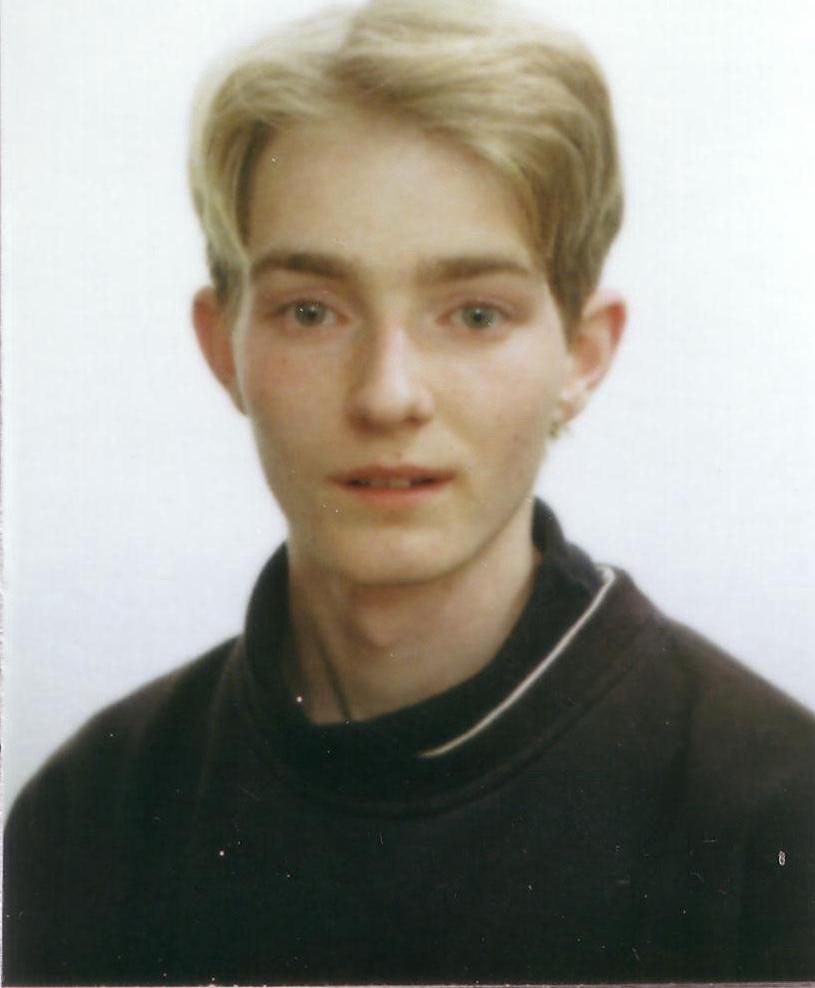
Bernd Seiffert lay at the scene for 10 to 20 minutes until he was discovered by his waving. In my opinion this time would have been enough to save his life, because he would have reached the hospital earlier and his injuries would not necessarily have been fatal.
The driver, Michel M., left the scene without caring for the severely injured man. My son – who remained fully conscious for some time – died only several hours later after an emergency operation.
#### The manhunt
After the fatal hit-and-run accident the police in Mönchengladbach formed a special investigation team on 28 April 2010. In addition to specialists from the hit-and-run unit and the traffic department, officers from the murder squad and the identification service were brought together into a 14-member team. Experienced detective chief inspector Friedhelm Schultz, head of murder commissions, was put in charge.
According to the investigators the vehicle of the fleeing driver was a Mercedes Sprinter or a largely identical VW Crafter. Vehicle parts secured at the scene could be attributed to these models (parts fitted since May 2006). All model variants were possible: closed and open box vans as well as open platform trucks. The investigators were looking for a vehicle missing its right exterior mirror.
Media interest (television, radio, newspapers and internet networks) was very high because of the particular tragedy and because of my continuous information about the events via the new media (Twitter and Facebook). Something like this had never happened before. A private individual initiating a large, international manhunt was new. Some newspapers and television stations even subscribed to my Twitter updates.
The case was reported extensively and over an unusually long period in various daily newspapers, magazines, internet news services and different television and radio news programmes. Intensive coverage continued from mid-2010 until the end of 2012. The last major article appeared in 2017 in the Rheinische Post.
For approximately 17 years I have been using my favourite platform, the internet network X (formerly Twitter). Measured by the number of readers who have subscribed to my messages, I have been one of the largest private German Twitter users for more than 17 years.
In my despair I notified my then roughly 380,000 Twitter friends. This triggered a real storm of retweets in the Twitter network that spread my manhunt requests throughout Germany and the world.
In the Twitter manhunt messages I informed about the fatal hit-and-run in Mönchengladbach and asked who had seen a Mercedes Sprinter van with a missing right side mirror. I also gave the telephone number of the special commission.
Through the messages on Twitter, which were distributed over several days and additionally with the names of larger cities within a radius of 1,500 kilometres, combined with a multiplication effect, it was possible to maintain public attention for four days.
The police spokesman said that never before in a hit-and-run case had so many tips been received.
The fact that the case was reported in the media for so long finally also led to success. After almost four days the perpetrator was arrested.
I later learned that the FBI and police in the USA had already been using Twitter for some time to search for criminals.
#### Arrest
On 2 May 2010 I learned that the hit-and-run driver had been arrested on the B57 – even after he had fatally run over a person without a driving licence – with a beer behind the wheel and 0.74 per mille in another car.
At the press conference on 3 May 2010 the police informed that Michel M. had already lost his driving licence earlier and was driving without a licence. Because he left my son lying there in order to cover up his criminal act, an arrest warrant was issued for attempted murder and negligent homicide.
I thank the tipsters and the investigating authorities for identifying the perpetrator so quickly. I am also very grateful for the overwhelming support in this major manhunt and for the valuable and countless expressions of condolence.
#### Updated explanations (2026)
The manhunt I initiated was the birth of what is known as “Fahndung 2.0” in Germany. It was the starting signal for German police authorities to set up their own social-media teams in order to manage “Fahndung 2.0” themselves from then on.
For this reason my Twitter manhunt was the first – but probably also the last – of this format in Germany.
This manhunt was in fact also the first major real-time crowdsourcing action of this kind in Germany.
Never before in a hit-and-run case – according to the police spokesman, not least thanks to Twitter – had so many tips reached the police. The perpetrator was then caught after four days and sentenced to nine years in prison for negligent homicide and attempted murder.
Through my manhunt the authorities recognised that social networks possess enormous leverage and reach that far surpass poster walls or classic newspaper appeals. Today they themselves use social-media platforms in a targeted and routine manner for digital manhunts.
My search was inspired by the television programme “Aktenzeichen XY… ungelöst” by Eduard Zimmermann. It was intended to – and had to – take place in close cooperation with the authorities. With the technical possibilities now available, however, it was possible to search not at weekly intervals but at intervals of minutes.
Differences from XY and further development:
– Traditional (XY): Passive, one-time presentation in the programme → tips by telephone/post.
– My Fahndung 2.0: Active, permanent real-time crowdsourcing, viral spread through retweets and targeted addressing.
The manhunt took place in close cooperation with the police, exactly as with XY appeals. My action was deliberately carried out in this spirit – but it was revolutionised with the new technical possibilities of the internet.
In summary: “Aktenzeichen XY” provided the conceptual model (public appeal for witnesses in close coordination with the authorities). I turned it into the digital, immediately effective variant – the starting signal for modern police social-media manhunts.
 Rainer Seiffert's Blog