Being a Christian in Everyday Life
This is not a theological textbook. I deliberately abandoned my theology studies because I did not want to submit to any institution and its currently valid interpretation. Instead, for decades I have been searching for a livable Christianity in everyday life.
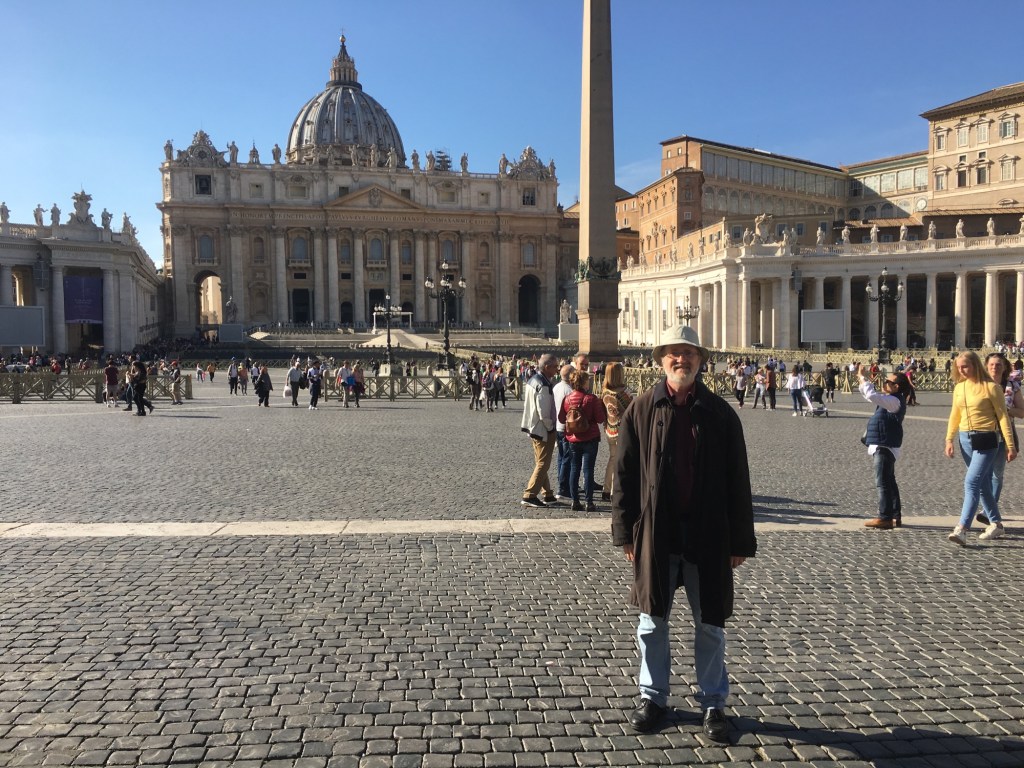
In this autobiographical-Christian essay series I only address those aspects that are especially important to me in practical application. Major doctrinal topics such as the Trinity or the sacraments are deliberately left aside – information on those can be found elsewhere.
In a time when more and more people in Germany are turning away from the churches, the communication of the core messages is particularly important. These messages have shaped our culture to an unimaginable degree and have helped many people lead a balanced and fulfilled life in harmony with God and creation.
**There is nothing good unless you do it.**
This famous saying comes from the German writer Erich Kästner (from his 1950 epigram “Moral”). He wanted to express that fine words and good intentions alone are not enough. One must actually put the good into practice.
The same is true of Christianity – and of every other religion: it must be lived. Mere membership on paper or baptism as a child is not sufficient.
#### My path to being a Christian
As far as I know, my ancestors have been Roman Catholic since 1606. I myself was baptised in the Catholic Church, received First Communion at the age of nine and later Confirmation in my parish of Heiligkreuz in Aachen.
Despite a traumatic experience with a chaplain in my parish, I remained a member of the Catholic Church. At the same time I observed that there was often a wide gap between Catholic teaching and lived reality.
> “All religions, arts and sciences are branches of the same tree.”
> – Albert Einstein
For this reason, from about the age of twenty I began to look at other denominations. Before doing so I read the entire Bible – Old and New Testament – three times in prayer. This intensive preparation was indispensable for me.
#### The Sermon on the Mount
The Beatitudes of the Sermon on the Mount remain central for me to this day. Jesus does not call the rich and powerful blessed, but the poor in spirit, those who mourn, the meek and the merciful. This is a radical reversal of all worldly values – and that is precisely what makes them so powerful.
Here are the essential statements:
**1. The Beatitudes (Matthew 5:1–12)**
– Blessed are the poor in spirit, for theirs is the kingdom of heaven.
– Blessed are those who mourn, for they shall be comforted.
– Blessed are the meek, for they shall inherit the earth.
– Blessed are those who hunger and thirst for righteousness, for they shall be satisfied.
– Blessed are the merciful, for they shall receive mercy.
– Blessed are the pure in heart, for they shall see God.
– Blessed are the peacemakers, for they shall be called children of God.
– Blessed are those who are persecuted for righteousness’ sake, for theirs is the kingdom of heaven.
**2. Salt of the earth and light of the world (Matthew 5:13–16)**
– You are the salt of the earth…
– You are the light of the world…
**3. The Antitheses – a deeper heart attitude (Matthew 5:21–48)**
Jesus places a new, deeper attitude of the heart against the old commandments, culminating in the command to love one’s enemies.
**4–7.** Further central teachings include the Lord’s Prayer, the call not to store up treasures on earth, the Golden Rule (“Whatever you wish that others would do to you, do also to them”), and the parable of the wise man who built his house on the rock.
#### The new birth – Nicodemus and the Holy Spirit
One of the most important passages for me is John 3:1–8, the conversation with Nicodemus:
Jesus explains that no one can see the kingdom of God unless he is born again – born of water and the Spirit. The wind blows where it wishes; you hear its sound, but you do not know where it comes from or where it goes. So it is with everyone who is born of the Spirit.
The core message is clear: a spiritual rebirth is necessary. The Holy Spirit cleanses and gives new, eternal life. His working is invisible and free like the wind, yet clearly recognisable by its fruits.
#### My further journey
I studied some Protestant theology and visited services and prayer groups of the regional church. Later I was a guest in Baptist and free-church congregations, among Pentecostals, Mormons and Jehovah’s Witnesses. Through all these experiences I remained rooted in the Roman Catholic faith, yet the encounters enriched my spiritual life.
Many years later, after my professional career, I engaged with the Rosicrucians and became a member of a Masonic lodge in Aachen. I then came into contact with the Buddhist community and intensively studied Tibetan writings as well as the Bhagavad Gita.
I remain firmly rooted in my Christian tradition, yet I recognise that other religions have developed certain human experiences more deeply – for example the precise psychological techniques of meditation in Buddhism. These can enrich Christian prayer life without weakening one’s own foundation.
The most respectful attitude, in my view, is:
“I am a Christian, but I bow before the wisdom of the Buddha and learn from him how to discipline my mind in order to become a better Christian and a better human being.”
#### Practical spirituality in everyday life
I use two complementary paths:
1. **Via Negativa** (emptying the mind) – letting go of thoughts and experiencing inner silence. In Christian mysticism this is the prerequisite for God to take space.
2. **Via Positiva** (orientation towards God) – consciously directing the mind towards God and waiting for the Holy Spirit – classic Christian contemplation and prayer of the heart.
From the silence often arise impulses of clarity and energy, which I attribute to the working of the Holy Spirit. These impulses lead to concrete decisions and actions in daily life.
A particularly helpful practice is daily gratitude. It combines modern psychology (counteracting the negativity bias) with the Christian attitude of praise. The classic and proven method is the Ignatian Examen.
#### The Ten Commandments and Jesus the Redeemer
The foundation from the Old Testament remains the Ten Commandments, regulating the relationship to God and to one’s fellow human beings.
In the Christian faith the role of Jesus as Redeemer is the absolute foundation: the Incarnation, the vicarious sacrifice on the cross, the Resurrection, and salvation by grace rather than by works.
#### The inner struggle: Spirit and flesh
Jesus already said: “The spirit is willing, but the flesh is weak” (Matthew 26:41). Paul describes the same struggle intensively in Romans 7: “For I do not do the good I want, but the evil I do not want is what I keep on doing.”
The solution does not lie in mere willpower, but in being led by the Holy Spirit (Romans 8 and Galatians 5).
**Works of the flesh** (Galatians 5:19–21) include sexual immorality, idolatry, enmity, strife, jealousy, fits of anger, rivalries, dissensions, envy, drunkenness and the like.
**The fruit of the Spirit** (Galatians 5:22–23) is love, joy, peace, patience, kindness, goodness, faithfulness, gentleness and self-control.
#### Closing thoughts
Jesus was open towards other people. Because of my experiences with different denominations and religions I consider openness and exchange important. There have already been enough wars of religion and confessional conflict.
Christianity, philosophy and the Enlightenment are for me not contradictions but three sides of the same coin. All of them call me not only to believe or to think, but to act well.
**There is nothing good unless you do it.**
That remains my guiding star.
 Rainer Seiffert's Blog